Director's Statement: Listening as a Way of Life
Filmmaker Ward Serrill has long been captivated by the simple act of listening. That fascination took root during seven years spent in an isolated Alaskan cabin beside a waterfall, where the constant voice of water and wilderness reshaped his awareness. From that experience grew the wish to create a film centred on sound with a spiritual heart.
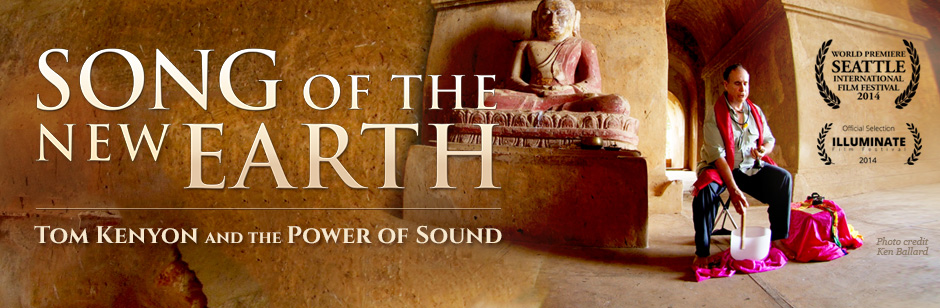
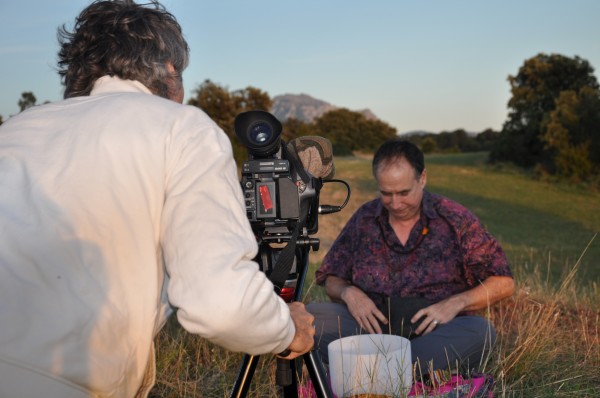
The full-size version of this photograph is also available: view the interview image in full resolution.

How the Film Came to Be
In 2009, while researching a project about Mary Magdalene in southern France, Ward and Sophie crossed paths with Tom Kenyon and Judi Sion, who were leading a Magdalene workshop near Rennes le Chateau. Ward already knew of Tom's recordings, including a CD said to be inspired by Mary Magdalene, and the couple agreed to meet.
That encounter proved pivotal: Tom offered a toning session for Ward and Sophie, and within the hour Ward had proposed. The thread of that story eventually led the pair to make a documentary about Tom and his sound work.
Tom struck Ward as a fascinating figure — analytical by temperament, describing himself as a musician and a researcher of the brain and how sound shapes brain states, yet simultaneously experiencing the kind of psychic, spiritual and paranormal states that yogis call samadhi and Japanese Buddhists call satori. Setting aside conventional musical structures, Tom developed a form of chanting or "toning" that draws on a voice spanning nearly four octaves, guiding listeners into deeper states of consciousness.
Four Aims Behind the Camera
- To portray one man's intimate relationship with sound and how he uses it.
- To help make psychic experience feel normal rather than extraordinary.
- To challenge viewers to look inward for insight of their own.
- To carry a message for a planet in peril.
What followed was a four-year journey accompanying Tom and Judi to locations across many countries — caves in France, chandeliered symphony halls in Vienna, and the remote San Juan Islands of Washington State, where the couple make their home.
Making the Invisible Visible
The hardest problem was how to film things that are essentially unseen: psychic experience and sound itself. The answer lay in combining nature imagery with animation, which led Ward to Seattle animator Drew Christie, whose talent made the collaboration a joy.
Ward is quick to note that a director often receives credit for the remarkable work of others. Central to the effort were editor Eric Frith, composers Jason Staczek and Ian Moore, and sound designer Dave Howe. Above all, none of it would have come together without the creative brilliance and insight of co-producer and life partner Sophie Jane Mortimer.
Ultimately, the director's deepest hope is not merely to tell a compelling story but to invite audiences into a direct experience of sound that reaches beyond the narrative. What that experience will be remains an open and intriguing question.
Stay Connected
Join the mailing list to receive news about the film, and follow along on social media.
Facebook Twitter Instagram



Share this page:


Reader Responses

Explore More
- Return to the home page
- Read the director's statement
- Check upcoming screenings
- Order the deluxe edition
- Contact us
- Privacy policy
No screenings are currently scheduled — check back soon for updates.
More Facebook YouTube Vimeo Site by The Medium WordPress©2014. All Rights Reserved.